Mini-Split Systems vs. Central Air: Best HVAC Choice for Older Charlottesville Homes
Charlottesville is a city that wears its history with pride. From the storied brownstones near the University of Virginia to the sprawling 19th-century farmhouses in Albemarle County and the charming mid-century bungalows in Belmont, our architecture is a testament to the past. However, anyone living in a home built before the 1980s knows that historic charm often comes with a distinct lack of modern climate control. As we navigate the humid peaks of the 2026 summer and the unpredictable dips of the Virginia winter, homeowners are increasingly faced with a difficult choice. Do you attempt to retrofit a traditional central air system into a structure never designed for it, or do you embrace the flexibility of a ductless mini-split?
At Albemarle Heating & Air, we have spent decades preserving the comfort of Charlottesville’s unique housing stock. We understand that in a historic home, the walls tell a story, and the last thing you want to do is cut through original lath and plaster or sacrifice precious closet space for metal ductwork. This guide explores the showdown between mini-split systems and central air, specifically through the lens of Charlottesville’s older homes. We will break down the comfort, cost, and structural implications to help you decide which system is the best fit for your historic investment.
The Structural Challenge: Retrofitting the Past
The primary hurdle for any older home in Central Virginia is the lack of infrastructure. Houses built in the early 20th century were designed for passive cooling, featuring high ceilings, large windows, and transoms to move air. They were not designed for the bulky, rigid ductwork required by traditional central air conditioning.
Central Air: The Invasive Option
Installing central air in a home without existing ducts is a major construction project. It often requires:
Sacrificing Square Footage: To run ducts between floors, you may need to build out bulkheads or drop ceilings, which can ruin the aesthetic of a high-ceilinged Victorian or Colonial.
Structural Modifications: Cutting through floor joists or original plaster walls can weaken the integrity of an older structure and lead to expensive carpentry repairs.
Limited Efficiency in Old Ducts: Even if your home has existing ductwork from an older furnace, those pipes are often undersized or poorly insulated for modern high-efficiency cooling, leading to significant energy loss.
Mini-Split Systems: The Surgical Solution
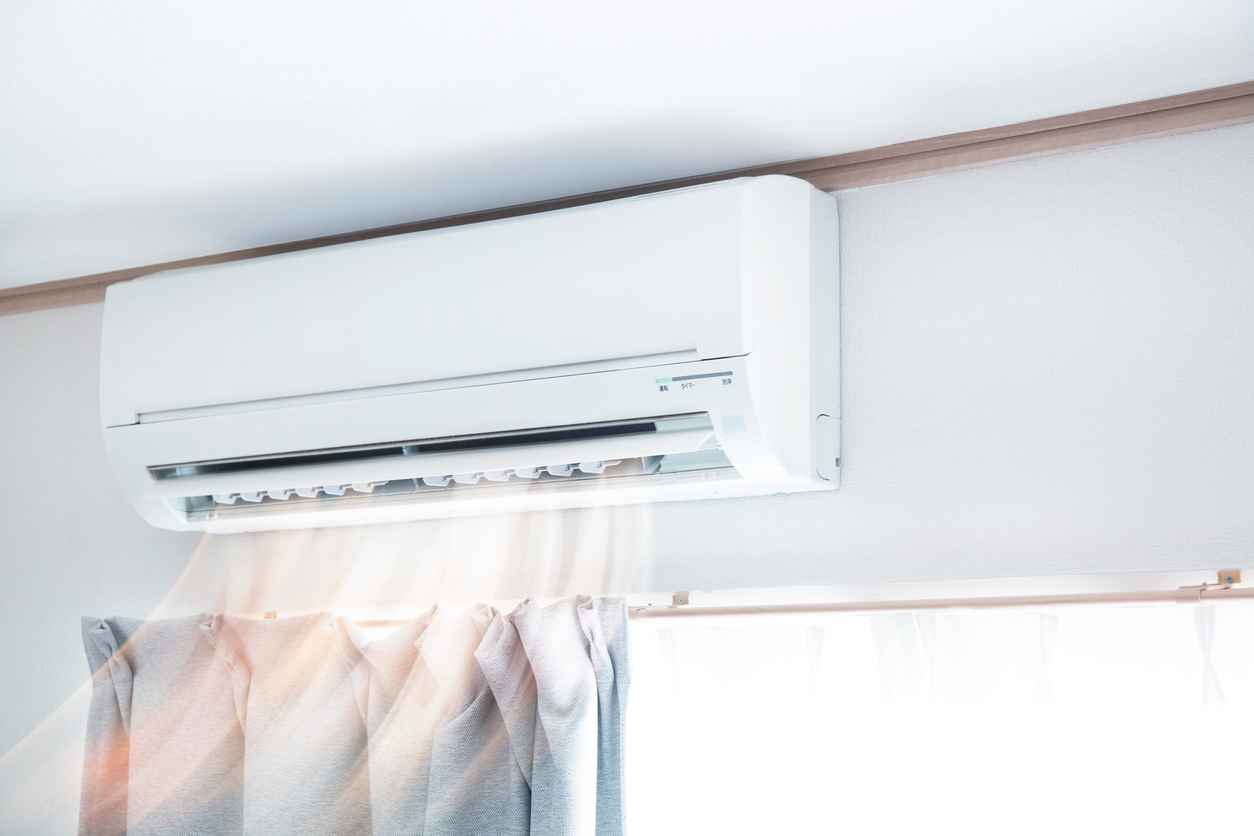
A ductless mini-split system is the preferred choice for preservation. Instead of massive metal tubes, mini-splits use small refrigerant lines, usually no more than three inches in diameter, to connect an outdoor condenser to indoor air handlers.
Minimal Intrusion: Installation usually only requires a small hole through an exterior wall. This preserves your original interior finishes and avoids the mess of a full-scale renovation.
Flexible Placement: Indoor units can be mounted on walls, tucked into ceiling cassettes, or even floor-mounted, allowing them to blend into the room without requiring structural changes.
Comfort and Zoning: The Battle Against Hot Spots
Older Charlottesville homes are notorious for uneven temperatures. The second floor of a West Main Street row house is often ten degrees warmer than the parlor, and the kitchen in a back addition might feel like a different climate altogether.
Central Air Comfort
Central air is designed for whole-home consistency. In a perfectly insulated modern home, this works well. However, in an older home with varying insulation levels and drafty windows, a single central thermostat often fails. The system keeps running to satisfy the thermostat downstairs while the upstairs remains sweltering. Adding zones to a central system is possible, but requires expensive motorized dampers and complex wiring that can be difficult to integrate into old walls.
Mini-Split Zoning
Mini-split systems are the undisputed champions of zoned comfort. Each indoor unit operates as its own independent zone with its own thermostat.
Personalized Cooling: You can keep the primary bedroom at 68 degrees for sleeping while the unoccupied guest rooms remain at 78 degrees.
Eliminating Hot Spots: Because each room has its own dedicated air handler, the system can account for the specific heat load of that space, such as a sunroom with original single-pane windows, without affecting the rest of the house.
Efficiency and 2026 Operating Costs
In 2026, energy efficiency is no longer a luxury; it is a necessity for managing the rising utility rates in the Piedmont region.
The Duct Loss Penalty
According to the Department of Energy, typical central air systems lose up to 30 percent of their cooling energy through leaks and poor insulation in the ductwork. In an older home where ducts might be running through a hot attic or a damp crawlspace, this “efficiency tax” is even higher. You are essentially paying to cool your attic before the air ever reaches your bedroom.
Inverter Technology
Ductless mini-splits suffer zero duct loss. Furthermore, almost all modern mini-splits utilize inverter technology. While a traditional central AC is either 100 percent on or 100 percent off, an inverter-driven mini-split can adjust its speed incrementally. It can run at 25 percent capacity to maintain a steady temperature, preventing the energy-hungry “start-and-stop” cycles that drive up electricity bills. In 2026, many mini-split systems carry SEER2 ratings of 20 to 30, significantly higher than the 15 to 17 SEER2 ratings found in standard central units.
The Aesthetic Debate: Invisible vs. Visible
For many Charlottesville homeowners, the decision comes down to aesthetics.
Central Air: This is the most discreet option. The only visible components are the floor or ceiling registers, which can often be replaced with decorative wood or iron grates to match the historic period of the home.
Mini-Split Systems: These require visible indoor units. While modern designs are sleek and compact, they are still a visible addition to your walls. However, for those who value the preservation of their plaster ceilings and crown molding, a visible wall unit is often considered a fair trade for avoiding major construction.
Cost Comparison: Upfront Investment vs. Long-Term Value
In 2026, the financial landscape for HVAC in Virginia has changed due to significant federal and local incentives.
Central Air Costs: If your home already has high-quality, insulated ductwork, replacing a central unit is usually the lower-cost upfront option. However, if you have to add ducts, the cost can double or triple, often reaching 20,000 to 30,000 dollars for a historic retrofit.
Mini-Split Costs: A multi-zone mini-split system for a whole house typically ranges from 12,000 to 22,000 dollars. While the equipment is more expensive, the labor savings from avoiding duct construction often make it the more affordable choice for older homes.
Incentives: Under the Inflation Reduction Act and various Virginia energy programs, high-efficiency mini-split heat pumps can qualify for tax credits up to 2,000 dollars. Our team at Albemarle Heating & Air stays up to date on these 2026 programs to help you maximize your return on investment.
Why Choose Albemarle Heating & Air?
Since 1988, we have been the home service experts for the Charlottesville area. We understand that an HVAC system in a historic home is not a “plug-and-play” appliance; it is a custom-engineered solution.
The 23-Point Inspection: Whether we are maintaining your current system or designing a new one, we provide a meticulous assessment that considers your home’s specific insulation, window types, and structural challenges.
Master Licensed Expertise: Our technicians are background-checked and highly trained in both traditional central air and the latest 2026 ductless technology.
Same-Day Service: We know that a system failure in a Virginia humidity spike is an emergency. We are committed to keeping our neighbors comfortable with responsive, professional service.
Preservation Mindset: We treat your historic home with the respect it deserves, ensuring that any installation is as non-invasive as possible.
Which is Best for Your Charlottesville Home?
There is no one-size-fits-all answer, but for the majority of older Charlottesville homes, the ductless mini-split is the superior choice. Its ability to provide high-efficiency cooling and heating without the structural destruction of ductwork makes it the ideal partner for historic preservation. However, if your home has been previously updated with quality ducts, a modern high-efficiency central air system may offer the discreet comfort you desire.
The best way to decide is with a professional consultation. Contact Albemarle Heating & Air today; We will evaluate your historic structure and provide a tailored recommendation that balances efficiency, cost, and the unique character of your home.
Why Choose UsDiscover the Albemarle Difference
Serving Since 1988
Fully Licensed and Insured
Trained and Experienced Technicians
Upfront Pricing
Peace of Mind Guarantees
24/7 Emergency Service
Serving Since 1988
Fully Licensed and Insured
Trained and Experienced Technicians
Upfront Pricing
Peace of Mind Guarantees
24/7 Emergency Service
Start Saving TodayLimited-Time Specials
No Payments & No Interest *if paid off during the promo period
Up To $1,000 Trade-In On New HVAC Systems
$100 to be exact! It Pays To Have Options
Free Service Fee with minimum $250 repair
Save 10% On an Indoor Air Quality Device
Save $50On ANY Service Call!
FREE SECOND OPINION Call For Details
50% OFF First-Time Customers On The Initial Service Fee.
What a pleasure it was turning on the shower last night and having immediate hot water! Also, using the much more comfortable and clean toilets! Once again, we are very pleased with the work your crew did!
I love Albemarle Heating and Air. Every single person we have ever had has been polite, concerned, efficient and knowledgeable. We have had them service both our furnace and our air conditioner and I felt good about every interaction ...
Albemarle Heating and Air has been servicing our HVAC for going on 10 years now. Always reliable, easy to deal with, and professional. Highly recommend!!
The technicians are always punctual, polite, and knowledgeable and take the time to explain their recommendations.
The technician was personable and knowledgeable on the repair. Great experience. I would use AH&A again!
The technician conducted a routine checkup of my HVAC system. He called me before he arrived, early in the four-hour window. He made sure to wear coverings on his feet. Told me what he was doing as he worked ...
Proudly Serving CHARLOTTESVILLE AND SURROUNDING AREASAlbemarle County | Fluvanna County | Louisa County | Nelson County | Augusta County | Madison County | Greene County | Orange County